The VC paradox: why venture capital isn’t for everyone (and that’s okay)
Venture capital can be transformative. But the real question for founders isn’t simply whether they can raise it. It’s whether it’s the right capital for what they’re building.


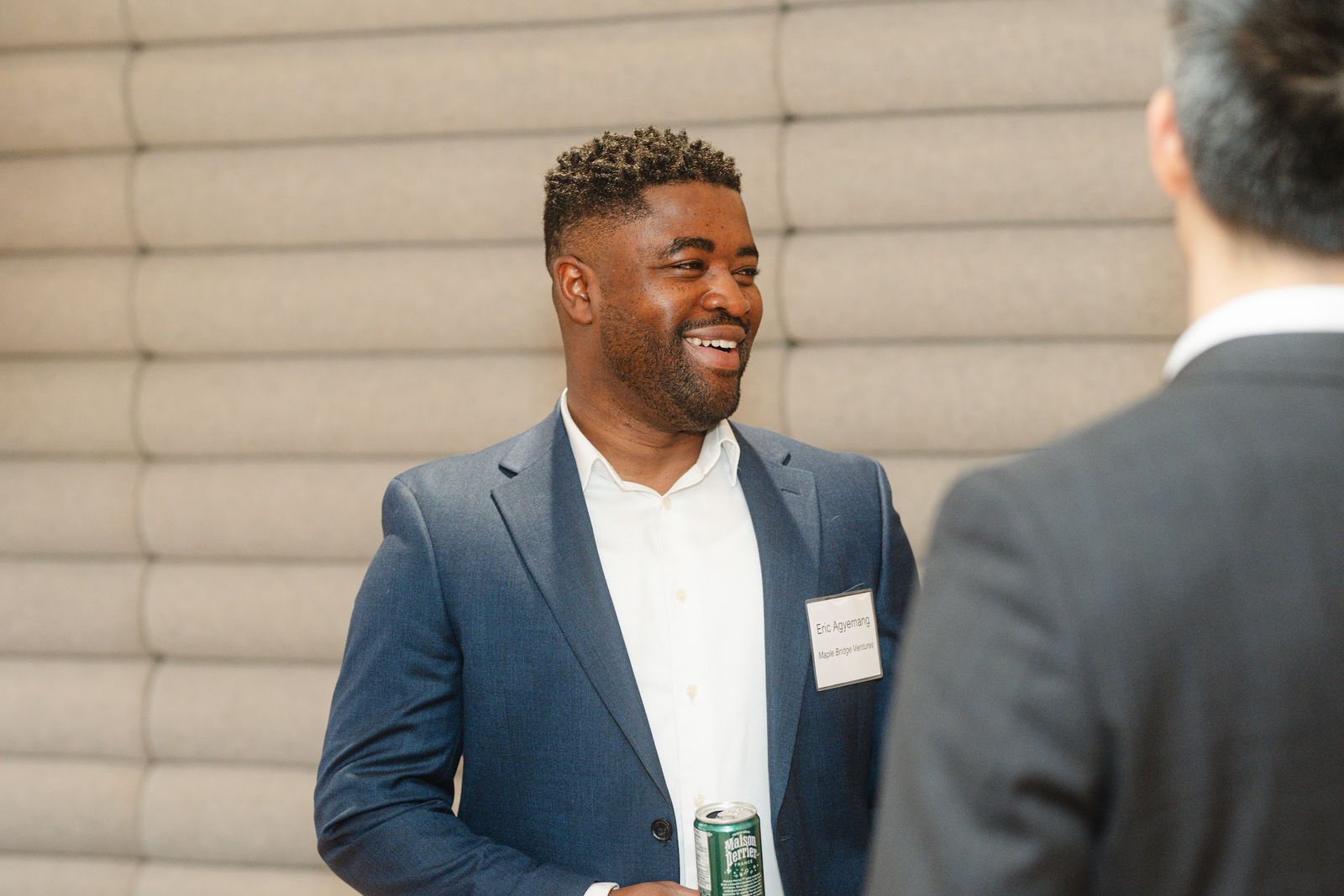
In late May, I had the opportunity to sit on a panel at the Regenerative Food Systems Investment Conference in Winnipeg to discuss what organizers called “The VC Paradox.”
Before we got into it, I had to acknowledge the irony in the room.
“As a venture capitalist, I’m about to spend the next 40 minutes explaining why venture capital isn’t for everyone,” I told the audience. “Hopefully I don’t talk myself out of a job.”
It got a laugh. And thankfully, by the end of the session, I managed to talk myself back into one.
Jokes aside, that comment touched on something I’ve wrestled with for years. As Founder and Managing Partner of Maple Bridge Ventures, I spend much of my time meeting founders, evaluating businesses, and thinking about how innovation gets funded. Every year, our team reviews hundreds of opportunities from entrepreneurs across Canada. Some are tackling massive challenges in food systems, healthcare, and enterprise technology, often with technologies or business models that could fundamentally change how an industry works. Others are building lean, highly profitable businesses in valuable niche markets.
Some are clear venture opportunities. Many are not.
Can vs. should
Founders spend a lot of energy asking whether they can raise venture capital, without always spending as much time asking whether they should.
Those are two very different questions.
It’s not difficult to understand why. Raising venture capital is one of the most visible milestones in the startup journey. A financing round can provide important external validation, attract talent, build market credibility, and give a company the resources to pursue an ambitious opportunity. When a founder announces a seed round, the congratulations that follow are often well deserved. Raising institutional capital is hard.
But a successful fundraise can sometimes be mistaken for the destination rather than the beginning of a new phase of the journey. Venture capital can be a powerful signal of conviction in a company’s potential, and at its best, it brings far more than money. The right investor can provide networks, strategic perspective, credibility, talent access, and support through the inevitable challenges of building and scaling a company.
There is also a reason venture capital has played such an important role in the development of groundbreaking technologies and enterprises. Many transformative ideas begin with significant uncertainty, long before conventional sources of financing are willing or able to support them. They may require years of product development, repeated experimentation, substantial upfront investment, or an aggressive push to build a new market before the market potential is obvious. Venture capital is uniquely designed to take some of those risks.
That is precisely what makes it so powerful. It is also what makes fit so important. VC is a highly specialized form of partnership, built around a particular ambition, pace, risk profile, and potential scale. When those elements align, it can help turn breakthrough innovation into an enduring enterprise. When they don’t, even a successful fundraise may not be the right outcome for the business.
When venture investors evaluate a company, we aren’t simply asking whether it’s a good business. We’re asking whether it has the potential to become exceptionally large within a timeframe that works for the economics of a venture fund. A business can generate healthy profits, build an incredible team, delight customers, create jobs, strengthen communities, and generate significant wealth for its founders without ever being a good fit for VC.
In fact, many exceptional businesses fall into exactly that category.

I like to compare venture capital to rocket fuel.
Rocket fuel is incredibly powerful. Used correctly, it can help launch something remarkable. But it doesn’t choose your destination, fix a broken engine, or tell you whether you’re actually ready for launch. It accelerates the trajectory you’re already on.
If you’ve built a scalable model, found strong demand, and are pursuing a massive market opportunity where speed matters, venture capital can help you reach escape velocity. The same can be true when a founder is commercializing a breakthrough technology and needs to move from promising innovation to widespread adoption before the window of opportunity closes. But if the underlying fundamentals are still developing, adding more fuel does not necessarily solve the problem. It may simply accelerate the business before it is ready.
Acceleration magnifies everything. That’s why venture capital is best understood as an accelerant, and founders should be clear about whether speed is actually the advantage their business needs.
Software speed vs. biological speed
This came through clearly during our discussions in Winnipeg. Some of the most important innovations in agriculture and food systems simply don’t fit neatly into software-style venture timelines.
Biological systems don’t scale overnight. Farmer adoption takes time. Physical infrastructure requires real capital. Field validation can span growing seasons, not product sprints. And building trust across agricultural communities is often a long-term process.
Yet these are also sectors where the need for innovation is enormous. How we produce food, improve resilience, reduce waste, manage inputs, respond to climate pressures, and strengthen supply chains will require ambitious founders and, in some cases, entirely new technologies and enterprises. The question is not whether those innovations deserve capital. It is what kind of capital, on what terms, and over what timeframe gives them the best chance to succeed.
Nature, as it turns out, doesn’t care about a venture fund timeline.
This inevitably raises a question that comes up often when investing in food and agtech: do we need new models of venture capital to better support innovation in sectors that don’t behave like software?
That is a healthy discussion for the industry to have. I’ve developed a few views on it myself, including where I think traditional venture models remain highly relevant and where there may be room to evolve, but that is an article for another day.
For this discussion, my baseline view is simpler: founders need a financing strategy that respects the physical and commercial realities of what they’re building, while still giving truly groundbreaking innovations the opportunity to become enterprises of meaningful scale.
The capital stack
A farmer doesn’t buy a combine harvester and expect it to clear snow, haul livestock, repair fences, and plant seeds. A combine is an extraordinary piece of machinery, but it was built for a specific job.
Capital works much the same way.
A food or agtech founder might use non-dilutive grants to fund early R&D, equipment financing for physical infrastructure, customer revenue or pre-orders to validate demand, strategic capital to unlock distribution, and venture capital to accelerate expansion. Each source of capital has a distinct job to do.
For a company developing something genuinely novel, that sequencing can be especially important. Grant capital may help prove the science. Strategic partners may help validate real-world application. Debt may finance assets once cash flows become more predictable. Venture capital may provide the risk capital, networks, talent, and speed required to turn a validated breakthrough into a company capable of reaching markets at scale.
The strongest financing strategy may not be choosing one over the others. It may be thoughtfully stacking several.
This is one of the questions I wish more founders asked. Not simply, “How do I raise venture capital?” but:
“What combination of capital gives this business the highest probability of success?”
The other side of the paradox: access
At this point, you might reasonably wonder why a practicing venture capitalist is spending so much time discussing when VC may or may not be the right fit.
Because there is another side to this paradox.
Venture capital isn’t right for every business. But for founders who are genuinely building venture-scale companies, including those pursuing groundbreaking innovations that may require risk capital to reach their potential, the opportunity to access it should be as broad as the talent and ambition that exist across our economy.
That distinction sits at the heart of why we built Maple Bridge Ventures.
We saw talented founders building ambitious companies who were not always reaching the capital, relationships, and networks that could help them scale. Early-stage investing is, by its nature, a relationship-driven business. Trust matters. References matter. Networks matter. Warm introductions can help investors navigate uncertainty when companies are young and data is limited.
Those dynamics are understandable. But they can also mean that exceptional founders outside established networks face a different path to being discovered. And when that happens, the risk is larger than missing a good investment. We may also be missing technologies, business models, and future enterprises that could meaningfully reshape industries.
As a first-generation immigrant myself, I understand how much opportunity can depend on access to networks you may not inherit. Who knows you. Who can make the introduction. Who can vouch for you. Whether you have proximity to the people and institutions that can help open the next door.
For many immigrant founders, the challenge is not a lack of ambition or capability. It can be getting the opportunity to have the business fully considered in the first place.
That distinction matters.
We built Maple Bridge Ventures around a gap we kept seeing firsthand: exceptional immigrant founders building ambitious companies, yet too often struggling to access early-stage capital and the networks around it. We believe many of these founders have the potential to build game-changing, venture-scale companies, and that backing them early represents a compelling investment opportunity.
We are not trying to make every founder venture-backable, nor do we believe every immigrant-founded business should pursue venture capital. Our focus is on exceptional founders building genuinely venture-scale companies, enterprises with the potential to introduce important innovations, reshape markets, and grow well beyond their starting point. That is precisely where our capital, networks, and institutional approach can help accelerate the journey.
That is the early-stage access gap we set out to help bridge.
Immigrant entrepreneurs are a significant and growing force in Canadian entrepreneurship.
If innovation can emerge from anywhere, then expanding the pathways through which exceptional founders reach early-stage capital is about more than broader participation. It is also about finding compelling opportunities the market may not yet fully see and helping promising innovations grow into enduring enterprises.
The question isn’t whether overlooked founders can build venture-scale companies. We already know they can. The more interesting question is how many exceptional companies, groundbreaking technologies, and potentially category-defining enterprises could achieve more if the founders building them had better access to capital, relationships, and networks at the moments that matter most.
When the fit is right
The best venture investors understand this broader context. They aren’t trying to force every company into a venture model. They look for alignment between the founder’s ambition, the scale of the opportunity, the economics of the business, the investor’s thesis, and the type of capital required to pursue it.
Sometimes that alignment leads to a term sheet. Sometimes it leads to advice. Sometimes it means pointing a founder toward a completely different source of capital that may give the business a better chance of succeeding.
All three can be good outcomes.
Which brings me back to the question I joked about at the start: had I just spent an entire panel talking myself out of a job?
I don’t think so.
Despite all the caveats, I remain deeply optimistic about venture capital. When the right founder meets the right investor, pursuing the right opportunity, with genuine alignment around the journey ahead, venture capital can be one of the most powerful forces for accelerating innovation.
At its best, it helps founders take ideas that may initially appear too early, too ambitious, or too uncertain for conventional financing and build them into consequential enterprises. It can help commercialize breakthrough technologies, create new markets, attract exceptional talent, expand globally, and tackle problems that require ambition and capital in equal measure. And it does so by combining risk capital with conviction, networks, expertise, and long-term partnership.
I’ve seen it happen in the founders we back and in the opportunities we review. For the right company, venture capital can unlock outcomes that would be difficult to achieve any other way. That is exactly why being thoughtful about fit matters so much.
A healthy entrepreneurial ecosystem should not be measured by how many founders raise venture capital. It should be measured by whether founders can access the capital, relationships, and support that best fit what they are trying to build, and whether those with genuine venture-scale potential have a fair opportunity to be discovered and backed.
For us at Maple Bridge Ventures, that second part matters deeply. We believe exceptional founders are still being overlooked, particularly when they sit outside established networks, and that some of those founders are building exactly the kind of groundbreaking innovations and ambitious, venture-scale enterprises this asset class is uniquely positioned to support. Bridging that early-stage access gap is not separate from our investment thesis. It is our investment thesis.
So, after 40 minutes in Winnipeg arguing that venture capital isn’t for everyone, I came away even more convinced of why our work matters. The point is not to put rocket fuel into every company. It is to find the founders building companies with the ambition, fundamentals, and potential to truly benefit from it, including those pursuing innovations that could reshape industries or create entirely new ones, and to make sure access to that opportunity is determined less by proximity to established networks and more by the strength of what they are building.
On reflection, I’m more confident than ever that my job is safe. But more importantly, I left Winnipeg optimistic about the opportunity ahead: to be more thoughtful about how we match capital to innovation, to broaden the pathways through which exceptional founders are discovered, and to help turn more groundbreaking ideas into enduring enterprises. If we can get that alignment right, the impact will reach well beyond venture capital, shaping industries, economies, and the kinds of companies that define the future.
— Eric Agyemang
Eric Agyemang is the Founder and Managing Partner of Maple Bridge Ventures, an early-stage Canadian venture capital fund investing exclusively in immigrant founders building game-changing, venture-scale companies across food and agriculture, health, and enterprise technology.